Professional Explanation for Investors

  • ⚠️ Risk Level: 83% (Low risk) Example

Investment Risk

Investment Risk – Professional Explanation for Investors

In our risk analysis, we apply a transparent and well-documented model in which investment risk is expressed as a percentage. The scale ranges from 40% to 100%, representing the probability of success for the given project.

  • 40% indicates a high risk that the project may not be realized or may fail to achieve its expected outcomes.

  • 100% represents no identified risk, corresponding to a 100% success rate in practical terms.

This scale enables investors to compare different projects on a consistent and measurable basis.

Basis for Risk Assessment

The risk percentage is calculated based on a comprehensive evaluation of both internal and external factors that affect the project’s feasibility and commercial potential. Each parameter is weighted and assessed individually, leading to an overall risk profile.

The key parameters include:

  • Patents – evaluation of protection, exclusivity, and potential legal risks.

  • Competition – market analysis of existing and potential competitors.

  • National policies and regulations – political stability, legislation, and trade restrictions.

  • Market potential – likelihood of successful commercialization and sales.

  • Subcontractors – dependency level, delivery reliability, and quality.

  • Board and management – experience, track record, and decision-making capability.

  • Investors – financial strength and commitment to the project.

  • Non-compete clauses – legal restrictions that may limit market access.

  • Permits and approvals – regulatory requirements, certifications, and process status.

  • Innovation and novelty value – level of innovation and market differentiation.

  • Product durability and quality – technical lifespan, reliability, and production standards.

  • Laboratory testing (LAB tests) – documented evidence of functionality and safety.

  • Contracts – existing agreements with customers, partners, or suppliers.

  • History of similar products – prior failures or bankruptcies within the same sector.

  • Project debt – financial structure, solvency, and liquidity risk.

Purpose of the Analysis

The purpose of this risk assessment is to provide investors with an objective decision-making foundation, clearly identifying both the strengths and weaknesses of the project. This model offers a comprehensive overview of how resilient the project is and how likely it is to generate a positive return on investment.

Our goal is to create transparency and trust by making complex risk factors measurable and understandable — giving investors a clear picture of both potential and risk.

CFO/CIO

Why Choose us Over Stocks

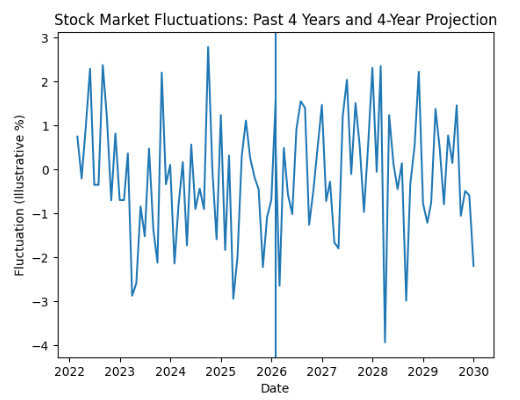
Investing in equities may be relatively unattractive at present and over the coming four years due to several structural and cyclical factors.

Equity valuations remain elevated in many markets, limiting expected future returns. At the same time, persistently higher interest rates increase firms’ financing costs and offer competitive returns in lower-risk assets, reducing the appeal of stocks. Macroeconomic uncertainty remains high, driven by inflationary pressures, slowing global growth, and constrained fiscal capacity. In addition, rising geopolitical tensions increase volatility and downside risk. Finally, demographic trends and potential overvaluation of emerging technologies further challenge long-term earnings growth assumptions.

Collectively, these factors suggest a less favorable risk-return profile for equities in the medium term, warranting a cautious investment stance.


Investing with Invest Business House may provide an alternative investment approach with a potentially more stable risk profile than traditional equity markets. By emphasizing diversification, structured investment strategies, and risk management, such an approach seeks to mitigate volatility while pursuing competitive risk-adjusted returns.